Richmond
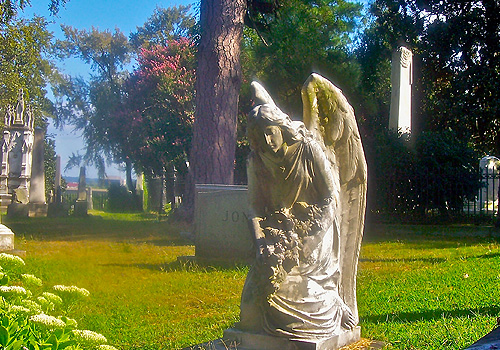

Hollywood Cemetery
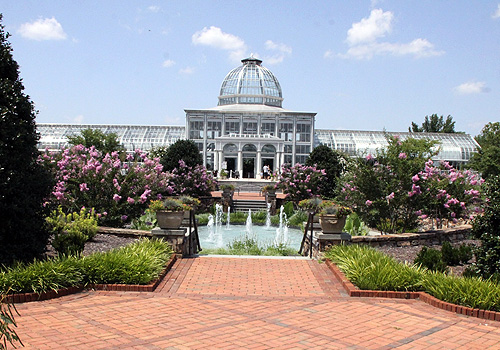

Lewis Ginter Botanical Garden
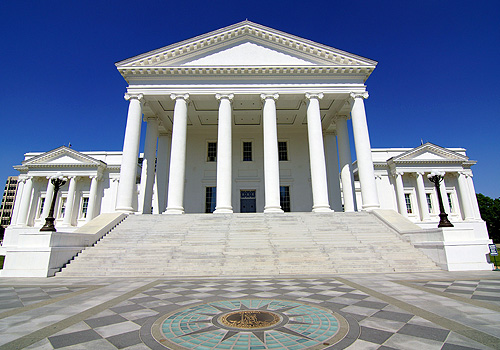

Virginia State Capitol Building
American Civil War Center
The American Civil War Center at Historic Tredegar is the nation's first museum to interpret the Civil War from Union, Confederate and African American perspectives. Educational programs, conferences and symposia, lectures and public programs help to tell the whole story of the conflict that still shapes our nation. The signature exhibit, In the Cause of Liberty, explores the war's causes, course, and legacies through the essential perspectives of the war's main participant groups.
Black History Museum and Cultural Center of Virginia
Founded in 1981 by Carroll Anderson Sr., the Black History Museum and Cultural Center of Virginia collects and exhibits artifacts and objects that serve to illustrate the history of Black peoples with an emphasis on Virginians. Located in the heart of historic Jackson Ward.
Chimborazo Medical Museum
The city of Richmond, capital of the Confederacy and primary target of Union campaigns, was also the central destination for thousands of Confederate soldiers wounded on the battlefields of Virginia during the Civil War. Realizing that a long war and thousands more casualties lay ahead, Southern leaders ordered the construction of five general hospitals in Richmond. The largest of these was Chimborazo. Today the Chimborazo Medical Museum houses a collection of equipment used by the doctors and nurses who tended to the soldiers of the Confederacy.
Hollywood Cemetery
Much more than a cemetery, Hollywood is a living story in stone, iron and landscape. It recalls Virginians of bygone years whose lives shaped and influenced our own. With stunning views, Hollywood overlooks the James River near the site where Captain Christopher Newport planted a wooden cross a few weeks after the founding of Jamestown. Hollywood serves as the final resting place of two American presidents, six Virginia governors, two Supreme Court justices, twenty-two Confederate generals, and thousands of Confederate soldiers.
Lewis Ginter Botanical Garden
Lewis Ginter Botanical Garden blooms year-round and includes more than 40 acres of spectacular plants and a 63-foot-tall domed conservatory housing orchids, exotic plants and changing displays.
Maggie L. Walker National Historic Site
The Maggie L. Walker National Historic Site commemorates the life of a progressive and talented African American woman. Despite many adversities, she achieved success in the world of business and finance as the first woman in the United States to charter and serve as president of a bank. The site includes her residence of thirty years and a visitor center detailing her life and the Jackson Ward community in which she lived and worked.
Maymont Park and Mansion
Maymont was the 100-acre Victorian country estate of James Henry and Sallie May Dooley. In 1886, the Dooley’s first viewed and purchased the rough pasture and field that would become Maymont. At the age of 40, with no children and the resources of her husband's prosperity at her disposal, Sallie Dooley led the effort to transform the landscape into a showplace that would rival the lavish estates that were springing up throughout the country.
Monument Avenue
One of America's most beautiful boulevards, tree-lined Monument Avenue is the only street in the United States that is a National Historic Landmark. After the Civil War, statues were erected on Monument Avenue to honor Confederate heroes. These include Confederate President Jefferson Davis, Robert E. Lee, commander of the Confederate Army, General "Stonewall" Jackson and General J.E.B. Stuart.
Shockoe Slip
Known as The Slip (and The Bottom of the slip) by right of the area's nearness to the Great Turning Basin on the James River Canal, it was once a hub of the mercantile industry. Paper mills, iron works, tobacco warehouses and factories stood like silent sentinels along the waterfront docks and watched the bustling commerce of the city. Today, The Slip is a charming conglomeration of nightclubs, shops, apartments, hotels, and restaurants.
St. John’s Church
St. John's Church became famous as a living memorial to American liberty when 120 Virginia colonial leaders including George Washington, Thomas Jefferson, Richard Henry Lee, Thomas Nelson, Jr. and Patrick Henry met there in the spring of 1775 to avoid the wrath of Royal Governor Lord Dunmore in Williamsburg. The Second Virginia Convention originally called to consider the recent proceedings of America's first Continental Congress became the setting for Patrick Henry's bold call for arming the colony of Virginia.
Tuckahoe Plantation
Situated on the James River, this extraordinary colonial plantation is considered one of the most complete existing 18th century plantation layouts in North America. Originally settled by the Randolph family of in the early 18th-century, a numerous and influential family, the Randolph's helped shape the early politics of the colony and the nation. Tuckahoe is the only early Randolph home still standing on its original site and was the boyhood home of America’s third president, Thomas Jefferson, 1745 until 1752.
Tredegar Iron Works
Tredegar Iron Works, named for an iron works in Wales, covered nearly five acres during the Civil War and operated day and night to satisfy the demands of the Confederacy for artillery, ammunition and other war-related materials. Tredegar is credited with the production of approximately 10,000 artillery pieces during the war years of 1861-1865. The foundry made the 723 tons of armor plating that covered the CSS Virginia (the former USS Merrimack), which fought the first battle between ironclad warships in March 1862. Today, the Tredegar Iron Works serves as the main visitor center for the Richmond National Battlefield Park.
Virginia Center for Architecture
The Virginia Center for Architecture is dedicated to developing the understanding of architecture and its influence on our lives, our communities and our world. In 2003, facing a golden anniversary and a new century, the landmark Tudor-Revival mansion designed by John Russell Pope, one of America's major architects was purchased. This new museum on Monument Avenue expands exponentially the Foundation's ability to provide exhibitions and programs to educate and entertain Virginians and visitors.
Virginia Historical Society
The Virginia Historical Society was founded in 1831. Chief Justice John Marshall was elected its first president and former president James Madison was elected its first honorary member. The Virginia Historical Society is one of the largest historical societies in the country and has more than 25,000 square feet of exhibition gallery space and the largest display of Virginia artifacts on permanent view. It is the only museum with all of Virginia’s history under one roof – all centuries, all regions and all topics.
Virginia House
Virginia House was completed a few months before the stock market crash of 1929. Situated on a hillside overlooking the historic James River in Richmond, Virginia House, was constructed from the materials of a 16th century English manor house. Although Virginia House was a blend of three romantic English Tudor designs, it was for its time a thoroughly modern home complete with seven full baths, central heat, modern kitchen and commodious closets. Now owned and operated by the Virginia Historical Society as a museum.
Virginia Museum of Fine Arts
The Virginia Museum of Fine Arts has a wide-ranging collection of world art including significant holdings of Classical and African art; paintings by European and American masters; one of the world's leading collections of Indian and Himalayan art; an internationally important collection of fine English silver; unequaled holdings of Art Nouveau and Art Deco furniture, ceramics, glass and jewelry; a dynamic collection of Modern and Contemporary art; a popular collection of Fabergé imperial jeweled objects; and noted holdings of French Impressionist and Post-Impressionist art.
Virginia State Capitol
The capital of Virginia was moved to Richmond during the American Revolutionary War and has remained the capital since 1780. The Virginia State Capitol houses the oldest legislative body in the United States, the Virginia General Assembly. It is one of only 12 state capitols in the United States that does not have an external dome. Thomas Jefferson is credited with the architectural design of the Virginia State Capitol building which was modeled after the Maison Carree at Nîmes in southern France.
Virginia War Memorial
The Virginia War Memorial's Shrine of Memory is a soaring tribute to the service and sacrifice of Virginia veterans and citizens in time of war. The Memorial was built to honor all veterans and particularly those Virginians killed in World War II, Korea, Vietnam and the Persian Gulf. The Memorial's primary features are a Shrine of Memory with more than 11,600 names of Virginia veterans who made the ultimate sacrifice in war engraved on its walls, the majestic statue Memory, the Torch of Liberty eternal flame, a Reflecting Pool, Flag Court, Rose Gardens, a Visitors Center and Memories of War artifact displays.
The Whitehouse and Museum of the Confederacy
Located in the historic Court End district of downtown Richmond, the Whitehouse of the Confederacy is one of the nation’s finest historic, architectural and decorative treasures. As the official residence of the first and only President of the Confederate States of America during the Civil War – Jefferson Davis – the building has earned a unique stature in American history as the social, political and military center of the Confederacy.
Your Connection to Williamsburg

Information is Free

Attention Teachers
Tour Operators